
Message from the Dean
While there are many universities in Japan where one can study policy science, the Graduate School of International Relations at IUJ offers several distinctive features that set it apart.
30
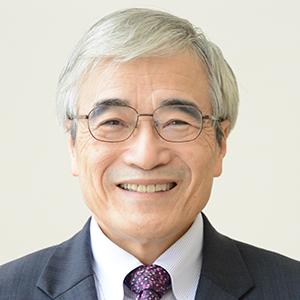
Hiroshi Kato
Dean and Professor
The first is its outstanding international character. Not only is our faculty highly diverse, but our student body is as well—with students currently coming from over 60 countries and regions around the world. All classes are taught in English. In such an environment, students are first introduced to globally recognized theories in the social sciences, while also being given the opportunity to engage in comparative analysis of diverse, real-world cases from across the globe.
30
The second distinctive feature is our interdisciplinary and cross-sectoral approach. The GSIR provides policy-oriented education that spans various academic disciplines, including international relations, economics, and public management. Students begin by enrolling in a specific program and acquiring the essential core knowledge and competencies required by that program. Building on this foundation, they are encouraged to take courses offered by other programs and graduate schools of IUJ according to their interests, thereby broadening their perspectives and enhancing their career development.
30
The third feature is the compact and closely-knit learning environment we offer. As a small graduate university, we maintain a low student-to-faculty ratio and small class sizes. Most courses are conducted in an interactive style, and thesis supervision is carried out with great care and attention to each individual student. In this learning environment, students are trained to systematically analyze challenges faced in the development processes of emerging and developing countries, and to formulate effective policy solutions.
30
Our graduate school is also designated as a partner institution for various international scholarship programs offered by organizations such as the Japan International Cooperation Agency (JICA), the International Monetary Fund (IMF), and the Asian Development Bank (ADB). As a result, we welcome many government officials and central bank staff from around the world. Beyond the academic content, the human networks formed here among future global leaders will no doubt become a valuable asset after graduation.
30
Finally, our school also offers a doctoral program. Doctoral students are affiliated with one of three clusters—Economics, Public Management, or International Relations—and conduct their research within that framework. Upon completion of the program, they are awarded the degree of Doctor of Philosophy in Economics, Public Management, or International Relations, respectively.